
April 24, 2017

The Top 10 Reasons I Love JV

I’ll just say this up front, if you’re looking for factual statistics and an unbiased, outsider opinion on Josiah Venture as an organization, this is not that.

I absolutely love Josiah Venture. I can’t help it. After all, the organization has been a part of my DNA since 1997 when my parents stepped out in bold faith and moved my family of five halfway around the world to Poland. I was nine then. Countless summer camps, trips around Europe, and two internships later, I’m a full-time staff member, committed to communicating the story God is telling through JV with all of you. I wholeheartedly believe it’s one worth telling. And so, I feel like I would be doing you an injustice if I didn’t at least try to explain on here why I deeply care about this organization and why I think you should too.

Here are the first of my top 10 reasons for loving JV. Check back next week for the continuation.

1) JV is about Central and Eastern Europe. While many missions organizations are doing great things in other places around the world, Europe is a mission field most have neglected. Communism brought drab cement buildings, graffiti swastikas, and empty stares of strangers on the streets. Ornate cathedrals that once housed the vibrant faith of these nations, nations that not too long ago shaped our own churches, were left behind and forgotten. Walk down the cobblestone roads of this region today, and you can still see the obvious effects of that fear-filled era. But Dave and Connie Patty, and other JV staff members, saw an opportunity over 20 years ago to bring the hope of Christ back into this place after the Berlin Wall fell. The open doors we are seeing in ministry currently are a direct result of God working in this unique area of the world for so many years and I, for one, am grateful to be here.

2) JV is about youth ministry. If you are a teenager in Central or Eastern Europe today there is less than a 1% chance that you have a personal relationship with Christ. Yet most Christians decide to follow God in their youth. Young people are the future leaders of their countries and are capable of being used by God in huge ways in their families, schools, and cities right now. We know this and believe it –that there are many young King Josiahs that God wants to use to transform this continent and bring society back to Him. The passion among JV staff members to reach the 99% is contagious, and their love for young leaders inspired me when I was a kid and continues to do so on a daily basis.

3) JV is about the local church. Josiah Venture is not a parachurch organization. Instead, we seek to effectively build up the Bride of Christ by partnering with the local church. Sometimes those churches are united and welcoming, healthy and thriving communities. We rejoice with them when this is the case. Other times, they sadly aren’t, and we pray that God would transform them. Either way, we do nothing without the invitation and involvement of these local congregations. JV staff members (many of whom are nationals themselves) work closely with national Christians in their areas, encouraging and challenging them to step up in leadership and serve within the body of Christ where God has placed them.
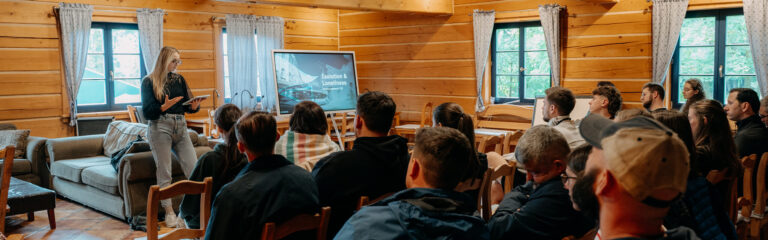
4) JV is about evangelism. This summer, like many summers before this, evangelistic camps will be taking place throughout JV’s 13 countries. We are currently gearing up to have around 110 summer interns who will work closely with short-term church teams and local European churches to put on around 130 English, music, and sports camps. We’re praying that because of this work, at least 850 non-believing young people would put their faith in Christ and that many more would grow in their understanding of who God is and how He loves them, wherever they are on life’s journey. I have personally seen this transformation happen before. I can easily recall the skeptical brows and pain-filled remarks of students I know who didn’t understand the power of the cross when I first met them at a JV camp. But I can also think about the bright eyes and joyful laughs of the same students, who after attending camp, are passionate about sharing the message of the cross and who I now get to serve alongside. God’s love is meant to be shared and we want to tell everyone about His good news, because it changes everything.

5) JV is about discipleship. JV has a focus on evangelism, for sure. However, we also invest a lot of time and energy into follow-up: what happens after people meet Christ. Josiah Venture is about walking with people long-term and equipping young Christians with potential in order that they may become mature leaders in their homes, churches, and countries, capable of making disciples who make disciples, just as Jesus Himself commanded us. This takes place in the ordinary moments of life, while sitting around tables eating good food or spending time in the gym doing crossfit together. It happens on the field, at the desk, and in our training centers. As someone who has been shaped my whole life by having solid, grace-filled believers leaning in and engaging with me, I can’t stress enough the value of discipleship. Intentionality and years of faithful steps towards God is what brings lasting change.

I could go on, but that’s where I’ll leave it for now. To read the second part of this article, click here

Related Posts

Read Story

Discipleship, Evangelism, Stories

Home

Sajmir just wanted to belong. As the youngest son in a Muslim family of eight children, he was expected to serve everyone. Sajmir’s family was oppressed in Albania because they were dark skinned Gypsies. On top of that, during the difficult time after the revolution, his father began drinking and beating his mother. “My father never beat me,” Sajmir said, “but he never showed me love. He never hugged me or kissed me. I never saw a father figure. I was afraid of him. Also, outside in the city, people were not very close to me. I spent most of my time alone, playing soccer alone, or basketball alone.” There was only one soccer field in his village, and when Sajmir tried to join a game, the other kids would kick him out. One day, a group came toward the field and Sajmir began to back away, sure they would ask him to leave. “Will you play with us?” they asked. “You want to play with me?” Sajmir replied. For the first time in his life, someone invited him in. After the game, they invited him to church. “What is a church?” he said. Running home, he asked his parents if he could go. “Don’t go to church,” they answered sternly, “you will shame us.” But the next day was Sunday, and he snuck out when no one was looking. “When I stepped into the church, at the door, someone gave me a hug for the first time in my life,” Sajmir said. “They put me in the first row. I felt like a celebrity. Then I heard the story that someone loves you just as you are, that is, Jesus—as I was, dark skinned, rejected. But still, there is someone who died for me.” “I ran and told my family, but their response was: ’If you go one more time, we will tell your brother to beat you up.’ I went again. My brother beat me up. For three months, I was beaten every week. I was loved and accepted in church, while suffering and being beaten in my family. Then my mom said, ‘Let him go.’” Filled with joy, Sajmir fell on his knees and said, “God, I will serve you wherever you want me to.” That was 25 years ago, and today Sajmir and his family are part of our Josiah Venture team in Albania. Through youth ministry, he recently planted a church called “Mosaic,” which has grown to over 100 people. Every day, young people come after school and in the evening for tutoring, children’s meetings, youth meetings, small groups, discipleship groups, and a very lively Fusion choir. The church is open every day, from 9:00 am to 7:00 pm, and there is always something happening. “Our building is a daily home for everyone; it’s a family,” says Sajmir. “I always remember what God did for me in my youth. My heart is burning to see more young people come to Christ and find that they are loved and belong.” During this Advent season, we remember how Jesus left his home to make a home for us. He was sent to find us, where we play our games alone, and to invite us into his family. He found Sajmir, and you, and me. Thanks for helping us share this good news with young people who are still without a home. Dave Patty President, Josiah Venture

Read Story

Stories

A Thanksgiving Challenge and Promise

Philippians 4:4-7 states, “Rejoice in the Lord always; again I will say, rejoice. Let your reasonableness be known to everyone. The Lord is at hand; do not be anxious about anything, but in everything by prayer and supplication with thanksgiving let your requests be made known to God. And the peace of God, which surpasses all understanding, will guard your hearts and your minds in Christ Jesus.” Two things stand out to me from this verse: a challenge and a promise. The Challenge: Christians are commanded to not be anxious about anything. Instead, we are to be thankful. Paul wrote this letter as he was in prison, preparing for his martyrdom. He acknowledged that his entire ministry was in the Lord’s power and he had nothing to be anxious about. Furthermore, his friends were not supposed to be anxious either. Rather, they were to thank the Lord for his provision and truth. In this situation, Paul was not instructing his friends to deny that there was hardship. He admitted that there would be pain in the future. However, with that, the Church was to devote all troubles to the Lord. How would this play out in a modern Thanksgiving Day context? Jenny Llamas was born in the Czech Republic, so she did not grow up with Thanksgiving. Landen, her American husband, did and has had so much fun introducing the holiday to her. From American football to turkey trots to sweet potato casserole with marshmallows, Landen and Jenny love getting to spend Thanksgiving either with their family or at Josiah Venture’s conference center in Malenovice, Czech with Josiah Venture missionaries. One challenge for Jenny, though, has been when people are asked to share what they are thankful for. It’s not the mental search for thankfulness that’s difficult for Jenny. Instead, it’s all the other thoughts that come to her mind too. It’s “the hard things in my life that sometimes even seem louder than the things I’m thankful for,” Jenny said. During these times, she wants to find ways to process and acknowledge times of hardship while also remaining thankful. So, how does Jenny do that when she is reminded of hard times during Thanksgiving? How does she process both pain and thankfulness? Jenny’s favorite part of Thanksgiving is the meal preparation. She has her own quiet time in the kitchen. As she experiments with all sorts of traditional American recipes, she reflects on how God has worked in her life over the past year. She recalls the exciting times of blossoming relationships with friends and the painful memories of things uncertain and hurtful. It’s in these moments that Jenny brings everything to God, both the good and the bad. That’s where the promise of Philippians comes into play. The Promise: In response to giving thanks, the Lord will surround us with his peace. When we submit to the Lord in thanksgiving, he places a spiritual shield around our hearts and minds. He takes us out of a state of fear and provides us with the ability to give thanks in all circumstances. When the meal preparation is complete and Jenny steps out to celebrate with friends, she reminds herself that God wants her to have peace. God has given her a spiritual family with whom she can process heartache and pain. He also provides her with the time to journal, writing down her thoughts as a way of acknowledging hardship and giving it to the Lord. Then, he gives her rest. “I say a quick prayer to the God who sees me,” she said. “I give myself permission to rejoice in what God has done and … take a break from the hard things knowing that God sees them and he holds them.” This Thanksgiving, I invite you to recognize the trials in your life and give them over completely to God. Replace the state of anxiety with the action of thankfulness, preparing your heart for worship as we enter into this holiday season. “The Lord is at hand.” (Phil. 4:5b)

Read Story

Events, Stories

You’re Not Alone in the Battle

When you’re used to leading, serving, and pouring into others, what happens when you suddenly can’t? What happens when the person who normally encourages everyone else wakes up and realizes she has nothing left to give? That’s where I found myself last year. I’m naturally a driven person. I love to see progress—to watch people grow, ministries flourish, and God’s work move forward. But last year, right before a major conference I had been preparing for—a mental health summit for nearly 700 youth leaders and church leaders—everything stopped. I got sick, and my normal pace of life vanished overnight. Suddenly, I couldn’t do what I thought I had to do. At first, I tried to stay positive, to find purpose in the pause. I told myself God was teaching me patience, humility, or to delegate better. But underneath those thoughts, a more dangerous narrative started to form: “God is disappointed in you.” “You’re not strong enough.” “You’re failing as a leader.” “Maybe God is holding back because you don’t deserve his help.” Those are the kinds of lies that can take root quietly—and quickly. It’s the same old whisper the enemy used in the Garden: “Did God really say…?” (Genesis 3:1). The serpent’s goal was never just to tempt Eve; it was to make her question God’s heart. And he still uses that same strategy today. He wants us to believe that God is distant, that we’re alone, unseen, and unloved. I’ve seen this pattern not only in my life, but in the lives of so many young people and leaders I’ve walked with. The moment things get hard—disappointment, exhaustion, relational conflict, failure—the enemy twists the truth. He tells us we’re forgotten, that our prayers don’t matter, and that no one really understands. And slowly, we start to isolate ourselves. But isolation is one of his most effective weapons. Once we withdraw, our vision blurs. We stop hearing the truth clearly. We start interpreting everything through the lens of fear, shame, and self-pity. Even Scripture is full of people who felt this same ache. David cried, “Turn to me and be gracious to me, for I am lonely and afflicted” (Psalm 25:16). Elijah, after a great victory, ran into the wilderness and said, “I have had enough, Lord” (1 Kings 19:4). Job sat surrounded by friends who misunderstood him. And even Jesus—our Savior—experienced complete abandonment in Gethsemane and on the cross. Loneliness and lies are not new, but neither is God’s response to them. In my own season of weakness, when I couldn’t find the strength to pray, others prayed for me. When I felt unseen, people showed up with meals, with text messages, and with quiet presence. Even my unbelieving neighbors said, “We think someone up there cares about you.” That was God reminding me: You are not forgotten. You are not alone. The truth is, the Body of Christ was never meant to function in isolation. Strength in God’s kingdom doesn’t mean independence—it means connection. It means letting others carry you when you can’t walk and trusting that God is at work even when you can’t see progress. This experience also helped me recognize a pattern: the enemy always attacks identity and connection first. He wants to disconnect us from God’s truth and from God’s people. But the way we stand firm is by returning to both. When I start to spiral now—when I believe I have to prove my worth or carry everything alone—I stop and remind myself of what’s true. I reach out to trusted friends and ask for prayer. I ground myself in simple spiritual and physical practices that bring me back to reality: breathing deeply, reading a psalm, or stepping outside to notice beauty. These small moments become declarations of faith. Romans 11:33-36 says, “Oh, how great are God’s riches and wisdom and knowledge! How impossible it is for us to understand his decisions and his ways!” That verse anchors me. I don’t have to understand everything; I just have to trust the one who does. Maybe you’re in a similar place right now. Or maybe you’re walking with young people who feel lost, invisible, or stuck in lies about who they are. The battle is real, but so is our victory in Christ. So, here’s my invitation to you: Would you take a moment to pray—for yourself, for your friends, and for the next generation—that we would recognize the lies of isolation, stand firm in truth, and live connected as the Body of Christ? You’re not alone in the battle. And neither are they.